On many farms, a flat store is the most flexible way to dry and store grain: the grain is dried and stored in the same space, extra handling steps are avoided, and outside the grain season the building can be used for other purposes. Building costs also compare well with other forms of storage. This flexibility comes with one condition, though: the aeration must match the heap.
Because drying in a flat store takes place close to ambient temperature, the interplay of air volume, air warming and grain depth decides whether the grain dries in time – or whether damp pockets and spoilage develop. This guide provides the key design figures: the right air rates, the permissible grain depths for each moisture content, and the answer to the question of whether a perforated floor or lateral ducts suit your store better.
The basic principle: drying close to outside temperature
For the air to draw water out of the grain, its relative humidity must be below the equilibrium humidity that corresponds to the water content of the grain. As a pointer: at 15 °C, a relative humidity of 65% corresponds to about 15% grain moisture. Each degree of air warming lowers the relative humidity of the drying air by around 5%. That is why a moderate warming of 4 to 6 °C above outside temperature is already sufficient in flat store drying – the energy needed for it is modest; as a rough figure, 1.5 kcal is enough to warm one cubic metre of air by 5 °C.
Timing also matters: drying should be completed as soon as possible after harvest. The longer moist grain sits, the greater the risk of fungal growth – and drying only at low autumn temperatures takes considerably more energy for the same result. Careful pre-cleaning before intake additionally improves the airflow through the heap and makes drying noticeably easier.
Air rates: the two key design figures
The air rate is stated in cubic metres of air per square metre of floor area per hour – provided the grain depth is matched to the moisture content. Two guide values have proven themselves in practice:
- Drying: around 350 m³ of air per m² of floor area per hour
- Aeration and cooling: around 100 m³ of air per m² of floor area per hour
For water removal, the rough rule is: about 12,000 m³ of air dries one tonne of grain by one percentage point. If you know the floor area, heap size and harvest moisture, you can estimate the total air requirement of a season.
Whether the fan actually delivers the required volume is shown by a back pressure gauge on the main duct: the normal working range is 85 to 135 mm water gauge. Using the fan performance curve, the measured back pressure translates directly into the current air output.
Grain depths by moisture content
The moister the grain, the shallower the heap must stay for the air to pass through it completely. The following operating chart applies to cereals:
| Grain moisture | Max. grain depth | Air warming | Mode of operation |
|---|---|---|---|
| 22–24% | 1.0–1.5 m | unheated | fan runs continuously |
| 20–22% | 1.5–2.0 m | unheated | fan runs continuously |
| 18–20% | 2.0–2.5 m | approx. 5 °C | with controller |
| 16–18% | 2.5–3.0 m | approx. 5 °C | with controller |
| 14–16% | 3.0–4.0 m | approx. 5 °C | with controller |
Three notes on use: the grain depth is measured from the floor to the surface. Level the heap after filling – only with an even depth everywhere does the air flow uniformly through the whole store. And for oilseed rape, at correspondingly lower moisture ranges, much shallower depths of only 0.7 to 1.5 m apply.
Perforated floor or lateral ducts?
Two proven designs exist for air distribution in a flat store – both have their place.
Fully perforated floor
With a perforated floor, the fan pushes the air into a plenum beneath the perforated surface. From there it rises evenly through the entire heap. The result is the most uniform air distribution across the full floor area – ideal when the building serves permanently as a grain store and the whole area is to be dried and cooled in one pass.
Lateral ducts on the floor
The classic flat store solution is half-round ducts laid on the store floor and supplied by a main duct from the fan. There is no need for a built-in plenum beneath the floor, and even large floor areas can be supplied with air evenly. Above all, the system works in sections: you place lots of uniform moisture deliberately over individual lateral ducts and start aerating as soon as a duct is covered by about 1.0 m of grain.
Work out the number of ducts that can run at the same time in three steps:
- Establish how many square metres of floor area each lateral duct supplies with air.
- Multiply that area by the air rate – 350 m³ per m² per hour for drying. That gives the air requirement per duct.
- Divide the fan output at the measured back pressure by the requirement per duct – the result is the number of lateral ducts that can run simultaneously.
Control and operating routine
Since outside air constantly changes its temperature and relative humidity, a flat store should not be operated without a controller. Even a simple humidistat control covers the needs of small and medium plants: mounted in the main duct, the humidistat switches the heat source and is set to the relative humidity that corresponds to the desired final moisture of the grain. Alternatively, an externally mounted humidistat controls the fan and is adjusted step by step as drying progresses. An automatic controller works more conveniently: it monitors the outside air, starts the fan as soon as the air is dry enough and switches in the heat source in unfavourable weather – protecting quality and cutting energy costs at the same time.
For harvest time, a fixed rhythm has proven itself: for 20 to 22 hours a day, part of the plant is dried intensively at the full air rate; then, for 2 to 4 morning hours, the whole waiting heap is aerated and cooled. Check every incoming load for moisture and temperature and record the readings in a harvest logbook – that way you see early on how the lots are developing.
Once drying is complete, cooling with unheated outside air follows – best in the late morning and early evening hours, when the air is cooler and drier than the grain. Cooling is repeated several times through the autumn until the heap has reached about 5 °C. In the store, measure moisture and temperature at several points roughly weekly after harvest, later at longer intervals; a temperature probe around 2 m long and a sampling spear belong to the basic kit. If the readings rise, counter-ventilate with cool, dry outside air. Regardless of that, quality benefits from airing the heap for a few hours every 3 to 4 weeks. One safety note belongs here: before entering the main duct, run the fan briefly so there is no risk of oxygen deficiency – and never climb into the heap alone.
Recommended action: six steps to the right design
- Fix the floor area and the planned heap size, and estimate the expected harvest moisture realistically.
- Choose the maximum grain depth from the operating chart – only 1.0–1.5 m at 22–24% moisture, up to 3.0–4.0 m at 14–16%.
- Calculate the air requirement: aerated area times 350 m³ per m² per hour for drying, times 100 m³ for aeration and cooling.
- Decide on the air distribution: a perforated floor for the permanent store with uniform airflow, half-round ducts for working in sections and for flexibly used buildings.
- Size the fan for the expected back pressure – the normal working range is 85–135 mm water gauge.
- Plan the controls from the outset, at least as a humidistat control – without one, every flat store gives away drying performance and energy.
Directly below this article you will find our aeration planner: it works out the air volume your store needs from floor area, grain depth and moisture content. The matching equipment – HVL low-pressure fans, KMG and KMP half-round ducts and the PST controller – can be found in our section Drying and Storage Systems. And if you are unsure which fan suits your floor area, the spare parts finder takes you to the right model in a few steps.
Flat store aeration planner
From floor area, goal and moisture: required fan air volume, recommended bed depth and capacity.
How we calculate
Guide values for initial orientation – no substitute for professional planning. Adjust the defaults to your crop and farm. We are happy to advise you personally for a binding design.
Frequently asked questions
How much air does a flat store need for drying?
How deep can grain be heaped in a flat store?
Does the drying air in a flat store need to be heated?
Which is better: a perforated floor or lateral ducts?
Matching products
 Aeration Blowers – HVL →
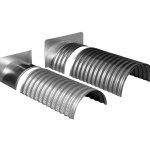 On-Floor Systems with Lateral Ducts – KMG/KMP →
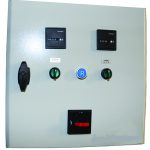 On-floor Drying Control System – PST →
Related guides
- Emptying silos and flat stores completely: vacuum clean-out in practice
- Finding Kongskilde Spare Parts: How to Use the Exploded Drawing and Part Number
- Grain Cleaning: Why Pre-cleaning Pays Off
- Grain Conveying: Pneumatic or Mechanical?
Exploded drawings and parts lists for all Kongskilde machines – with PDF download.
Open spare parts finder →