The few weeks after harvest decide whether grain remains storable for a year or loses quality. Whether aeration drying in the flat store, batch drying in the silo or heated air in a continuous-flow dryer is the right approach depends on harvest volume, grain moisture and intended use. This guide compares the methods and shows what matters in terms of energy input and grain quality.
Why grain moisture determines storability
Freshly threshed grain is living produce: every kernel respires, drawing on its dry matter and releasing heat and water to its surroundings. This combination of moisture and warmth creates ideal conditions for storage moulds, insects and mites. Storage moulds are regarded worldwide as the main cause of grain losses, as they destroy germination capacity and can produce toxins that are harmful to health.
The most effective countermeasure deprives these pests of their basis for life: for safe storage, grain is brought down to about 14 per cent moisture content, depending on use and storage period – mites, for instance, need around 14 to 15 per cent to become active. Temperature is just as important: grain should not be put into store warmer than 15 degrees and should be cooled consistently after drying.
The principle: warmer air absorbs more water
Grain is hygroscopic and settles at an equilibrium moisture content that depends on the relative humidity of the air. At 65 per cent relative humidity and 15 degrees, wheat settles at a good 14 per cent grain moisture. Air therefore only dries if its relative humidity is below the equilibrium value of the target moisture.
This is where every form of heated-air drying comes in: when air is warmed, its relative humidity falls – as a rule of thumb by about four to five percentage points per degree of warming – and its capacity to absorb water rises. Conversely, hardly any drying is possible at air temperatures below around ten degrees. Those who postpone the process into late autumn therefore pay with considerably higher energy input and risk mould growth.
Aeration drying in the flat store
With aeration drying, the grain is dried directly in the storage building: a low-pressure fan pushes outside air – slightly warmed if required – through the bulk via underfloor or semi-circular ducts. Drying and storage take place in the same location, no additional transfer is needed, and outside the season the building can be used for other purposes. Construction costs are considered comparatively low.
Bulk depth, air volume and supplementary heat
The key is matching bulk depth, air volume and air temperature to the grain moisture: very moist grain at 22 to 24 per cent is stored only about 1.0 to 1.5 metres deep and aerated continuously with unheated air; the drier the grain, the deeper the bulk may be – up to 3 to 4 metres at 14 to 16 per cent, then with slight supplementary heat of a recommended 4 to 6 degrees above outside temperature.
- Pre-clean the crop before intake – this significantly improves air permeability.
- Check every load for moisture and temperature and store lots of the same moisture over the same duct section.
- Level the surface and start aerating as soon as the duct is covered to a depth of about one metre.
As guide values, drying requires around 350 cubic metres of air per square metre of floor area per hour, and pure aeration and cooling around 100. As a rough estimate, about 12,000 cubic metres of air are needed to dry one tonne of grain by one percentage point.
The control system determines the energy costs
As the outside air constantly changes in temperature and humidity, a flat store should never be operated without a control system. A humidistat control starts the fan only when the outside air is dry enough and switches the heat source in only when the natural drying capacity is insufficient. The process thus runs in the shortest possible time with minimum energy input.
Batch drying in the silo
With batch drying, the grain is treated batch by batch in a drying silo. In batch dryers such as Kongskilde’s wooden silos, the air flows radially from a central perforated tube through the bulk. It is moderately warmed, typically 15 to 30 degrees above ambient temperature; a complete cycle including the cooling phase takes about 10 to 25 hours depending on initial moisture.
The low air temperatures make the process particularly gentle – including for large-seeded crops with high initial moisture. For seed grain, a drying air temperature of no more than around 40 degrees is recommended so that germination capacity is preserved. As a guide value for heat demand, around 1,200 kilocalories per kilogram of evaporated water apply – with sufficient air volume, the heat output determines the drying time.
The storage drying variant with cold air
A particularly gentle variant is storage drying: the grain is dried directly in the storage silo with mostly unheated air and remains there until outloading. Larger drying and storage silos handle crops from about 20 per cent moisture in this way, smaller aeration silos up to about 18 per cent. The method is particularly suitable for germination-sensitive produce such as peas, beans or seed grain, but needs considerably more time than the heated-air variants. Suitable equipment for silo and flat-store drying can be found in the category Drying and Storage Systems.
Heated air in the continuous-flow dryer – and the direct comparison
For large harvest volumes and wet years, the continuous-flow dryer is the most powerful solution. The grain travels continuously through zones of hot and cooler air; as a result, the grain temperature remains limited despite high air temperatures. Drying air at 65 degrees there often results in only around 40 degrees grain temperature, and a pass takes about one hour.
In energy terms, hot air has the advantage: the same amount of heat binds considerably more water at high temperature, so high capacity and low specific energy consumption go hand in hand. Grain quality sets the limits: excessive grain temperatures can cause cracks and destroy germination capacity, with moist grain tolerating less heat than dry grain. One side effect speaks in favour of heated air: storage pests and their larvae die off at temperatures above 42 degrees.
| Method | Air temperature | Typical duration | Particularly suitable for |
|---|---|---|---|
| Aeration drying in the flat store | Outside air, warmed by approx. 4–6 °C if required | Days to weeks | Drying and storing in the same place, flexible building use |
| Batch drying in the silo | approx. 15–30 °C above ambient temperature | approx. 10–25 hours per batch | Seed and quality lots, gentle batch handling |
| Storage drying in the silo | mostly unheated air | several days to weeks | germination-sensitive crops, drying without transfer |
| Heated-air continuous-flow drying | high air temperatures, grain stays considerably cooler | about 1 hour per pass | large volumes, wet harvests, maximum throughput |
After drying: cooling, monitoring, maintenance
Once the target moisture is reached, the lot is cooled with unheated outside air – ideally when outside temperature and humidity are below the values of the crop, for instance in the late morning or early evening. Cooling is repeated in autumn until the grain has reached around 5 degrees.
During storage, the rule is: measure and record moisture and temperature at several points, roughly weekly after harvest and less often later. If the values rise, aerate immediately with cool, dry air; regardless of this, the lot benefits from several hours of aeration every three to four weeks. Important for safety: run the fan briefly before entering the main duct and never climb into a grain bulk alone. To make sure fans and dryers run reliably at harvest, suitable wear and spare parts can be identified via the spare parts finder.
Conclusion: which method when?
The methods are not mutually exclusive – many farms combine a dryer for the harvest peak with aerated storage. As a guide:
- Aeration drying in the flat store: when existing buildings are to be used, harvest moisture is moderate and flexibility counts.
- Batch drying in the silo: for seed and quality lots that are to be dried gently, batch by batch, at low air temperature.
- Storage drying: when time is available and sensitive crops are to stay in the silo without transfer.
- Heated-air continuous-flow dryer: for large volumes and wet harvests, when throughput is decisive.
In every case: dry soon after harvest, cool consistently and check the lot regularly – this preserves quality until marketing. The category Drying and Storage Systems provides an overview of fans, silos and aeration equipment.
Drying calculator: water removal, energy, cost
How much water must be removed – and what does the energy roughly cost?
How we calculate
Guide values for initial orientation – no substitute for professional planning. Adjust the defaults to your crop and farm. We are happy to advise you personally for a binding design.
Frequently asked questions
To what moisture content must grain be dried for storage?
What is the difference between cold-air and heated-air drying?
How deep may the bulk be in flat-store drying?
Why must seed grain not be dried too hot?
Matching products
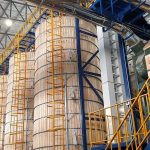 Wooden Silos / Bin Dryers – KCT/KCE/KC →
 Aeration Blowers – HVL →
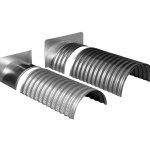 On-Floor Systems with Lateral Ducts – KMG/KMP →
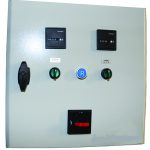 On-floor Drying Control System – PST →
Related guides
- Designing flat store aeration: ducts, air volumes, grain depths
- Emptying silos and flat stores completely: vacuum clean-out in practice
- Finding Kongskilde Spare Parts: How to Use the Exploded Drawing and Part Number
- Grain Cleaning: Why Pre-cleaning Pays Off
Exploded drawings and parts lists for all Kongskilde machines – with PDF download.
Open spare parts finder →