Grain goes on living after harvest: every viable kernel respires, consuming its own dry matter and giving off heat, water vapour and carbon dioxide. A dry matter loss of just one percent releases around 37,600 kcal per tonne – arithmetically enough to warm the lot by 65 °C if the heat is not carried away. In many countries a loss of this order during storage is considered normal.
The real damage, however, is done by storage fungi, insects and mites. They all thrive in warm, moist conditions – precisely the climate that moist, strongly respiring grain creates for itself: heat and water from grain respiration boost the activity of fungi and pests, whose metabolism in turn supplies more heat and moisture. This spiral turns a small pocket into major damage in a short time. This guide shows how to recognise infestation, which limit values matter and what to do immediately.
Warning signs: recognising infestation in the store
Not all damage is visible to the naked eye. For seed, malting and bread grain in particular, close inspection with all the senses is therefore a duty. Take four signals seriously:
Musty smell and caking
A dull, musty smell points to active storage fungi. Species such as Aspergillus glaucus cause not only the typical mustiness but also caked, clumped pockets in the grain bulk. Discoloured germs or wholly discoloured kernels are a further fungal symptom.
Hot spots
Rising temperatures in the grain bulk are the clearest alarm signal. Fungi such as Aspergillus candidus heat the grain to as much as 55 °C – spoilage then follows almost immediately. So measure regularly at several points and at different depths.
Condensation
The respiration of grain, fungi and insects releases water vapour. When warm, moist air rises from a pocket, it condenses on cold surfaces. Condensation under the roof or damp zones on the surface of the heap show that something is at work in the bulk.
Beetles, larvae and mites
Grain weevils and related species bore holes into the kernel and prefer to eat the nutrient-rich germ; under favourable conditions a single female lays up to 400 eggs within a few months. Bored kernels are then open to fungi. Mites – more than 80 species are known on grain – are harder to spot but a serious warning sign: they only occur when the grain moisture is too high for safe storage. Fungi are then usually active as well, and even a few mites spread spores and toxins through the lot.
Thresholds: when it gets critical
Whether fungi, insects or mites become active is decided essentially by two figures: grain moisture and temperature. The following working values from grain biology help you assess your measurements:
| Pest organism | Active from grain moisture | Temperature behaviour | Practical consequence |
|---|---|---|---|
| Storage fungi (Aspergillus, Penicillium species) | 13.5–16.5% depending on species (wheat/maize, at 20 °C) | optimum 26–30 °C; some species still grow at 0 to −5 °C | cold alone does not stop every fungus – the moisture must fall below the minimum values |
| Aspergillus flavus (toxin producer) | from approx. 18% (wheat/maize) | growth from approx. 10 °C | produces carcinogenic toxins; even small amounts endanger humans and animals and reduce the value |
| Storage insects (e.g. grain weevil) | breeding from approx. 9%, survival from 8% | optimum 28–38 °C; largely inactive below 16 °C, killed above 42 °C | cool consistently; hot-air drying kills weevils, eggs and larvae |
| Mites | from 14–15% | survive down to 5 °C | reliably excluded only at no more than 12% and 3 °C; practicable: dry to 13–14% |
For the overall assessment: the warmer the store, the drier the grain must be. Even at 16% grain moisture, completely safe overwintering is only assured below 4 °C – and as a rule no grain should be stored warmer than 15 °C, even if it comes off the combine harvest-dry.
Immediate measures on suspicion
If a warning sign is confirmed, speed counts. Work through the following steps in this order:
- Measure and localise. Determine temperature and grain moisture at several points and pinpoint the pocket. Judge the lot honestly by smell, discolouration and admixture – and check the surroundings of the suspect zone too, because not all damage is visible.
- Cool and aerate. Get cold air into the grain bulk without delay: even low air rates of 10–20 m³ per hour per tonne are enough to cool a lot down in a targeted way. The aim is a bulk below 15 °C, and well below that at elevated moisture. Suitable aeration and drying equipment can be found under Drying and Storage Systems.
- Move the grain by suction conveying. If a hot spot cannot be broken up by aeration, the lot has to be moved. Transferring it with a mobile suction conveyor such as the Kongskilde SUC loosens and mixes the grain and already cools it in the airstream; the affected zone can be extracted selectively, stored separately or sent straight to drying. Where insects are present, the hot-air dryer has an added benefit: above 42 °C, weevils, eggs and larvae die.
- Clean. Broken kernels, dust and green plant matter reduce the safety reserves of any lot and give fungi and pests a foothold. Run suspect grain over a grain cleaner – the Kongskilde KF and KDC series reliably separate admixture, broken grain and light material; Cleaners gives an overview. Then clean the emptied store thoroughly as well, because fungal spores and pests survive in residues, corners and crevices.
Prevention: never let the spiral start
- Dry to a safe moisture: around 14% grain moisture is the guide value for storage – depending on storage period and end use. Drying to 13–14% helps against mites.
- Cool at once – dry grain too: never leave harvest-warm grain above 15 °C; in a temperate climate, aeration at low air rates is sufficient for this.
- Clean before intake: the cleaner the lot, the bigger the safety margin against fungi, weevils and mites.
- Store hygiene and monitoring: clean and disinfest stores before filling, check stored lots regularly – especially seed, malting and bread grain.
The quickest way to work out which combination of drying, aeration, cleaning and conveying suits your farm is our spare parts finder.
Recommended action
Treat every warning sign as an acute case: measure, cool, move and clean if necessary – in that order and without delay. A hot spot does not wait for the next inspection date, because the released energy of 37,600 kcal per tonne per percent of dry matter loss drives the spoilage on by itself. Keep your store below 15 °C, match the grain moisture to temperature and storage period, and take in only clean lots, and you deprive fungi, weevils and mites of their livelihood – securing weight, quality and germination through to sale.
Storability check: is my grain safe?
Enter grain moisture and temperature – the traffic light shows if action is needed.
How we check
Guide values for initial orientation – no substitute for professional planning. Adjust the defaults to your crop and farm. We are happy to advise you personally for a binding design.
Frequently asked questions
How do I recognise mould in the grain store?
At what grain moisture do storage fungi grow?
What should I do about mites in grain?
Does cold help against grain weevils?
Matching products
 Aeration Blowers – HVL →
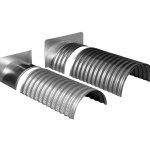 On-Floor Systems with Lateral Ducts – KMG/KMP →
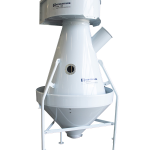 Aspirators – KF →
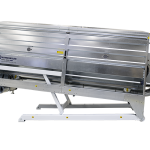 Grain Cleaners – KDC →
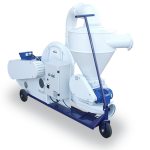 Suction Blowers – SUC and SupraVac →
Related guides
- Designing flat store aeration: ducts, air volumes, grain depths
- Emptying silos and flat stores completely: vacuum clean-out in practice
- Finding Kongskilde Spare Parts: How to Use the Exploded Drawing and Part Number
- Grain Cleaning: Why Pre-cleaning Pays Off
Exploded drawings and parts lists for all Kongskilde machines – with PDF download.
Open spare parts finder →