Many months often pass between harvest and sale – and during that time, the store decides how much of the harvest quality survives. Those who consistently manage grain moisture, temperature and aeration protect their grain from moulds, mites and storage insects and safeguard weight, germination capacity and market value. This guide shows which conditions should prevail in the grain store, how aeration works and where the most common mistakes occur.
Stored grain is alive – and it breathes
A freshly threshed kernel is not dead produce but a living organism. It takes in oxygen, respires starch from the endosperm and releases heat, water vapour and carbon dioxide in the process. This process runs all the more intensively the moister and warmer the grain lies – and it is self-reinforcing: respiration generates heat and moisture, and both drive respiration further.
The consequences are measurable. In many regions, one per cent of dry matter or more is lost during storage. What sounds harmless releases considerable energy: the heat generated per tonne by a one per cent dry matter loss could, in theory, warm the grain by 65 °C if it were not removed. In addition, above a certain moisture range biological activity does not rise steadily but in leaps – and that is exactly where the danger zone for self-heating and spoilage begins.
The real spoilers: moulds, mites, insects
Respiration losses cost money, but the major damage is caused by organisms for which moist, warm grain is an ideal habitat. Storage moulds are regarded worldwide as the main cause of grain losses: they kill the germ, discolour the grain and produce toxins (mycotoxins), some of them hazardous to health, which devalue a lot even in small quantities. Mites are barely visible to the naked eye but spread mould spores – their presence is a sure sign that the grain is lying too moist. Storage insects such as the grain weevil eat holes in the kernels, opening up additional entry points for mould infestation.
| Adversary | Favourable conditions | Critical thresholds | Typical damage |
|---|---|---|---|
| Grain respiration | rising moisture and temperature | increases sharply above a break point in grain moisture content | dry matter loss, self-heating, moisture build-up |
| Storage moulds | moist, warm climate, optimum 26–30 °C | growth, depending on species, from approx. 13.5–16.5 % grain moisture (wheat/maize) | loss of the germ, discolouration, mycotoxins |
| Mites | temperate climate, moist grain | from approx. 14–15 % grain moisture, active down to around 5 °C | spread of mould spores, quality loss |
| Storage insects | warmth, optimum 28–38 °C | die off above approx. 42 °C, largely inactive below approx. 16 °C | feeding holes, weight loss, entry point for moulds |
Important: These threshold values come from trials with clean, undamaged grain. Grain in practice contains broken kernels, dust and green matter – the actual safety margin is therefore smaller.
Safe target values for moisture and temperature
Reliable rules of thumb can be derived from grain biology:
- Grain moisture content: For safe storage, grain is dried to around 14 % – or lower, depending on intended use and storage period.
- Temperature: Grain should not be stored warmer than 15 °C. Even grain that is dry at harvest usually comes off the field considerably warmer and must therefore be actively cooled.
- Moister grain needs more cold: At 16 % grain moisture, completely safe overwintering is only achieved below about 4 °C.
- Freedom from mites can only be expected at no more than 12 % moisture and temperatures around 3 °C – values rarely reached in practical stores. Hygiene and regular monitoring are all the more important.
Behind this lies a simple relationship: the warmer the store, the drier the grain must be – and the cooler the grain lies, the more moisture it tolerates without loss of quality.
Aeration: cooling, drying, stabilising
Grain is hygroscopic: it exchanges moisture with the surrounding air until an equilibrium is reached. At 15 °C and 65 % relative humidity, for example, wheat settles at around 14.3 % grain moisture. Store aeration exploits precisely this effect – in two operating modes.
Aeration cooling
For cooling, low airflow rates of around 10 to 20 m³ per hour and tonne are sufficient. Cool, dry air flows through the grain bulk, carries away respiration heat and moisture and pushes the temperature below the activity thresholds of insects and moulds.
Aeration drying
If the natural drying power of the outside air is not sufficient, moderate warming helps: if the air is warmed by one degree, its relative humidity falls, as a rule of thumb, by around 4.5 percentage points – and its capacity to absorb water rises accordingly. At outside temperatures below about 10 °C, on the other hand, hardly any meaningful drying is possible; cooling then matters most.
Air distribution in silos and flat stores
In flat-bottomed silos, the air is often blown into a plenum beneath a perforated floor and rises evenly from there through the bulk; alternatively, lateral ducts or floor tunnels distribute the air across the silo area. In flat stores, semi-circular ducts laid on the floor take on this task. Manufacturers such as Kongskilde combine low-pressure fans with perforated floors, duct systems and automatic controls for this purpose. A humidistat control automates operation: if the outside air is dry enough, the fan starts; if it is too moist, the system stays off or a heat source cuts in. This saves energy and prevents moist air from rewetting the grain. The category Drying and Storage Systems provides an overview of suitable fans, aeration ducts and silo systems.
Typical storage mistakes – and how to avoid them
- Put into store too warm: Those who leave harvest-warm grain lying without cooling give insects and moulds valuable weeks in a comfortable climate.
- Aerating without watching the air humidity: Air that is too moist does not dry the grain but rewets it. Without measurement or control, the benefit of aeration turns into its opposite.
- Uncleaned produce: Broken kernels, dust and green matter respire more strongly, accumulate in pockets and are preferred targets for moulds and insects. Cleaning before intake pays off.
- Poor store hygiene: Residues of old lots in corners, pits and conveying equipment form a permanent reservoir for pests and mould spores.
- No monitoring: Not all damage is visible from the outside. Especially with seed, malting and bread grain, regular temperature and moisture measurements are a must.
- Equipment not ready for use: If a fan fails during a critical phase, every day counts. Wear and spare parts for aeration equipment can be quickly identified and procured via the spare parts finder.
Conclusion: six steps to safe storage
- Measure grain moisture at intake – estimates are not enough.
- Dry to around 14 % grain moisture, lower for long storage periods or sensitive produce.
- Cool the grain bulk swiftly below 15 °C and make consistent use of cool weather windows.
- Control aeration according to the condition of the outside air – ideally automatically via a humidistat.
- Check weekly: temperature trend, smell, condensation, pest infestation.
- Keep the store and conveying equipment clean and service the aeration equipment before the season.
Those who observe these points deprive the living grain of exactly what its adversaries need: warmth and moisture. Proven equipment for drying, cooling and storage – from low-pressure fans to silo systems – can be found together in the category Drying and Storage Systems.
Storability check: is my grain safe?
Enter grain moisture and temperature – the traffic light shows if action is needed.
How we check
Guide values for initial orientation – no substitute for professional planning. Adjust the defaults to your crop and farm. We are happy to advise you personally for a binding design.
Storage volume calculator
Enter your harvest, choose the crop – get the required storage volume.
How we calculate
Guide values for initial orientation – no substitute for professional planning. Adjust the defaults to your crop and farm. We are happy to advise you personally for a binding design.
Frequently asked questions
How moist may grain be for storage?
What is the optimum temperature in a grain store?
When should I aerate my grain store?
How do I recognise incipient spoilage in the store?
Matching products
 Aeration Blowers – HVL →
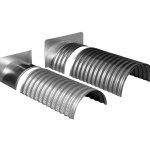 On-Floor Systems with Lateral Ducts – KMG/KMP →
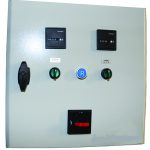 On-floor Drying Control System – PST →
 Wooden Silos / Bin Dryers – KCT/KCE/KC →
 Bulk Storage – Steel Grain Bins →
Related guides
- Designing flat store aeration: ducts, air volumes, grain depths
- Emptying silos and flat stores completely: vacuum clean-out in practice
- Finding Kongskilde Spare Parts: How to Use the Exploded Drawing and Part Number
- Grain Cleaning: Why Pre-cleaning Pays Off
Exploded drawings and parts lists for all Kongskilde machines – with PDF download.
Open spare parts finder →